

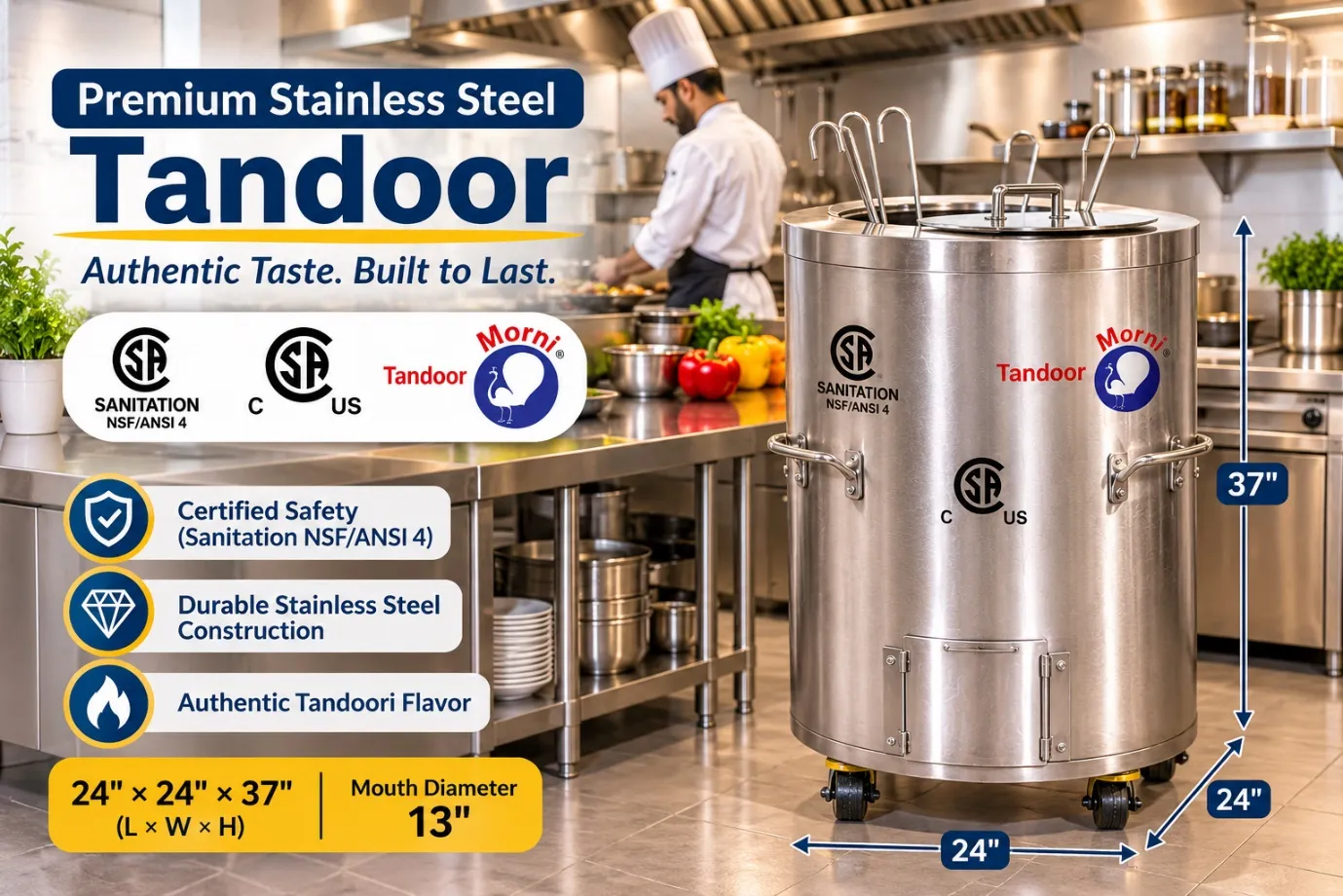
Tandoor oven for sale
A chef drafts a menu with garlic naan, tandoori chicken, and seekh kebabs, then realizes there is no clear plan for cooking any of it. That gap usually appears when equipment is picked before the menu is settled, and a tandoor oven is no exception. If you are scanning every tandoor oven for sale you can find, start by writing down what will actually come out of the clay chamber each night. Those answers will narrow your options faster than any spec sheet, and they keep the search grounded in real kitchen needs. Traditional tandoors and clay tandoors reward this kind of planning.
Start With the Dishes You Plan to Sell
Naan, kulcha, and roti cook against the chamber wall, while chicken, paneer, and lamb usually hang on skewers. Each style asks for different tools and a different reach inside the tandoor oven. Sorting dishes this way takes ten minutes and saves weeks of confusion.
List your top ten dishes and mark which ones need wall contact and which need skewers. A menu built around bread will use the tandoor oven very differently from one built around kebabs, and that difference shapes everything that follows.
Anyone comparing commercial tandoori ovens will find that this list answers many questions before the first supplier call. It also gives you a plain reference to check every later decision against, whether you are leaning toward traditional tandoors or modern builds.
Count Your Peak-Hour Orders
Average daily sales hide the real pressure point. What matters is how many breads and skewers you must finish between seven and nine on a Friday night, when tickets stack up quickly.
Estimate that peak number, then think about how many items fit in the tandoor oven chamber at once. A wider opening can hold more food, but it also needs more fuel and more floor space. Larger clay tandoors can also take longer to heat, so match capacity to real demand.
Keep this figure in front of you as you shop. It stops a tempting tandoor oven for sale from distracting you with a size your busiest hours would quickly outgrow, and it protects you from paying for capacity you will never use.
Map the Floor Space and Clearances
A tandoor oven is a heavy, heated object, so it needs more than a patch of floor. Staff must be able to reach inside, pass skewers safely, and walk behind the unit without squeezing past each other.
Measure the footprint, the working height, and the clear space on every side. Include the delivery path too, since doorways, corridors, and tight corners limit what can be brought in. Clay tandoors are heavy and fragile, so the route matters even more. Note where gas lines, drains, and electrical outlets already sit.
Kitchens with tight layouts should check the commercial tandoori ovens on offer against these measurements first. A size that fits on paper can still crowd the line during service, so leave room for movement.
Think Through Ventilation Before Anything Else
Every tandoor oven releases intense heat and smoke, and the hood system has to handle it. Local codes decide what is required, so confirm the details with your inspector or contractor before you order.
Ask whether your current exhaust can serve the new oven or needs changes. That question can affect cost and timing more than the tandoor oven itself, especially in older buildings.
Owners who treat ventilation as an afterthought often delay their opening. Planning it early makes any tandoor oven for sale easier to judge, because you already know which installations are realistic for your space. This applies equally to commercial tandoori ovens and traditional tandoors.
Weigh Charcoal Against Gas for Your Kitchen
Charcoal-fired traditional tandoors are linked with traditional smoky flavor, but they require fuel storage and ash handling. Gas-fired tandoor ovens offer simpler start-up and steadier heat control, though they depend on a safe gas connection.
Neither choice is automatically better. The answer depends on your menu, your staff, and what your building allows, so weigh each point against your own situation rather than a general rule. Talk through the pros and cons with the people who will cook daily.
Whatever you lean toward, confirm the fuel type of every one of the commercial tandoori ovens on your shortlist. Fuel affects daily routines, storage, and safety planning, so it should never be an assumption.
Look Closely at Build and Materials
Traditional tandoors use a clay chamber that holds and radiates heat in a way thin metal alone does not. In clay tandoors, the outer shell protects that clay and gives the unit its structure.
Ask what the tandoor oven chamber is made of, how it is insulated, and how the exterior is finished. Clear answers show that a seller understands the equipment and is willing to explain it. Ask how the clay is protected during shipping as well, since clay tandoors can crack in transit.
Photos only say so much, so request written specifications for any tandoor oven for sale you seriously consider. Do not assume details that are not stated, and keep those documents for future reference.
Budget for the Tools That Come With It
The tandoor oven is only part of the spend. Long skewers, bread cushions, gloves, and brushes all affect how smoothly service runs, and each one has a price. Some items wear out over time, so plan for repeat purchases.
Add these items to your budget early so they do not appear as surprise costs after delivery. Skewer length should also suit the depth of the chamber, so measure before you order.
When you compare commercial tandoori ovens, check which tools are offered alongside them and which you must source separately. That small step makes side-by-side comparisons far more honest. Traditional tandoors and clay tandoors may include different accessories, so confirm what ships in the box.
Plan Who Will Run the Oven
A tandoor oven rewards skill. Slapping dough onto a hot wall and pulling the bread at the right moment takes practice, and even experienced cooks need time on a new clay tandoor. Consistency comes from repetition, not from the equipment alone.
Decide who will be the main tandoor cook and who will cover busy nights or days off. Training time belongs in your opening schedule, not in the middle of service.
A traditional tandoor that matches your team’s experience serves you better than a larger tandoor oven for sale that nobody on staff feels confident using. Skill and equipment should grow together.
Ask Practical Questions Before You Commit
Once your shortlist is ready, speak with the seller directly. Ask about delivery, installation needs, initial heating instructions, and the availability of replacement parts for your tandoor oven.
Request specifications in writing and compare them against your notes on menu, peak volume, space, ventilation, and fuel. Gaps are easy to spot when everything sits on one page. Written answers also help if questions come up after delivery.
A seller who answers plainly is a good sign when you evaluate commercial tandoori ovens for a working kitchen. Take your time, since this purchase will anchor part of your menu for years, and well-made clay tandoors can serve a kitchen for a long time when cared for properly.
Conclusion
Buying a tandoor oven is really a decision about food, people, and space, with the metal and clay coming last. Once your menu, peak orders, ventilation, and team are mapped out, product pages for commercial tandoori ovens, traditional tandoors, and clay tandoors become much easier to read. Browse the range at Tandoor Morni with those notes beside you, and measure every option against them rather than against price alone. A tandoor oven chosen this way fits the kitchen it enters and keeps your cooking steady long after the first busy weekend arrives, and the reasoning behind your choice stays easy to explain to partners and staff.